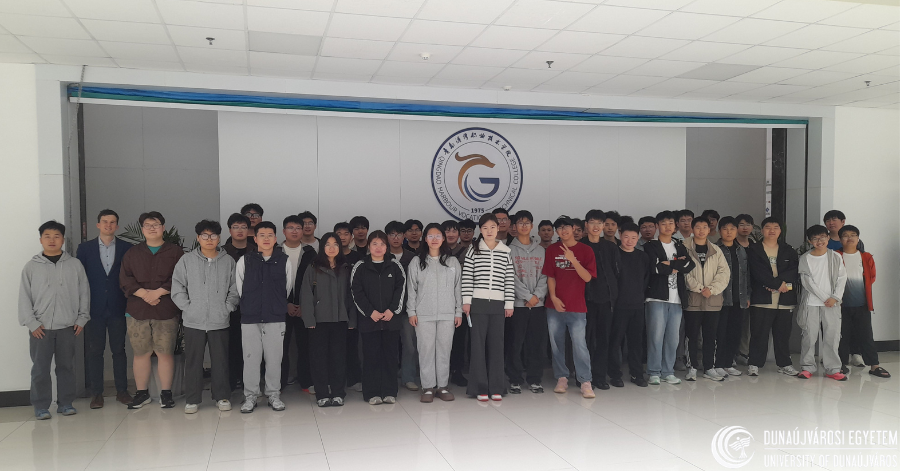
What does it really mean to experience another educational culture? Teaching mobility abroad not only provides valuable professional experience, but also offers an opportunity to look at our own familiar practices from a different perspective. In the third part of our series, Dr. Péter Ákos Szilassy, Assistant Professor at the Department of Mechanical and Energetic of the Institute of Engineering Sciences at the University of Dunaújváros (UoD), shares his experiences of teaching in China.
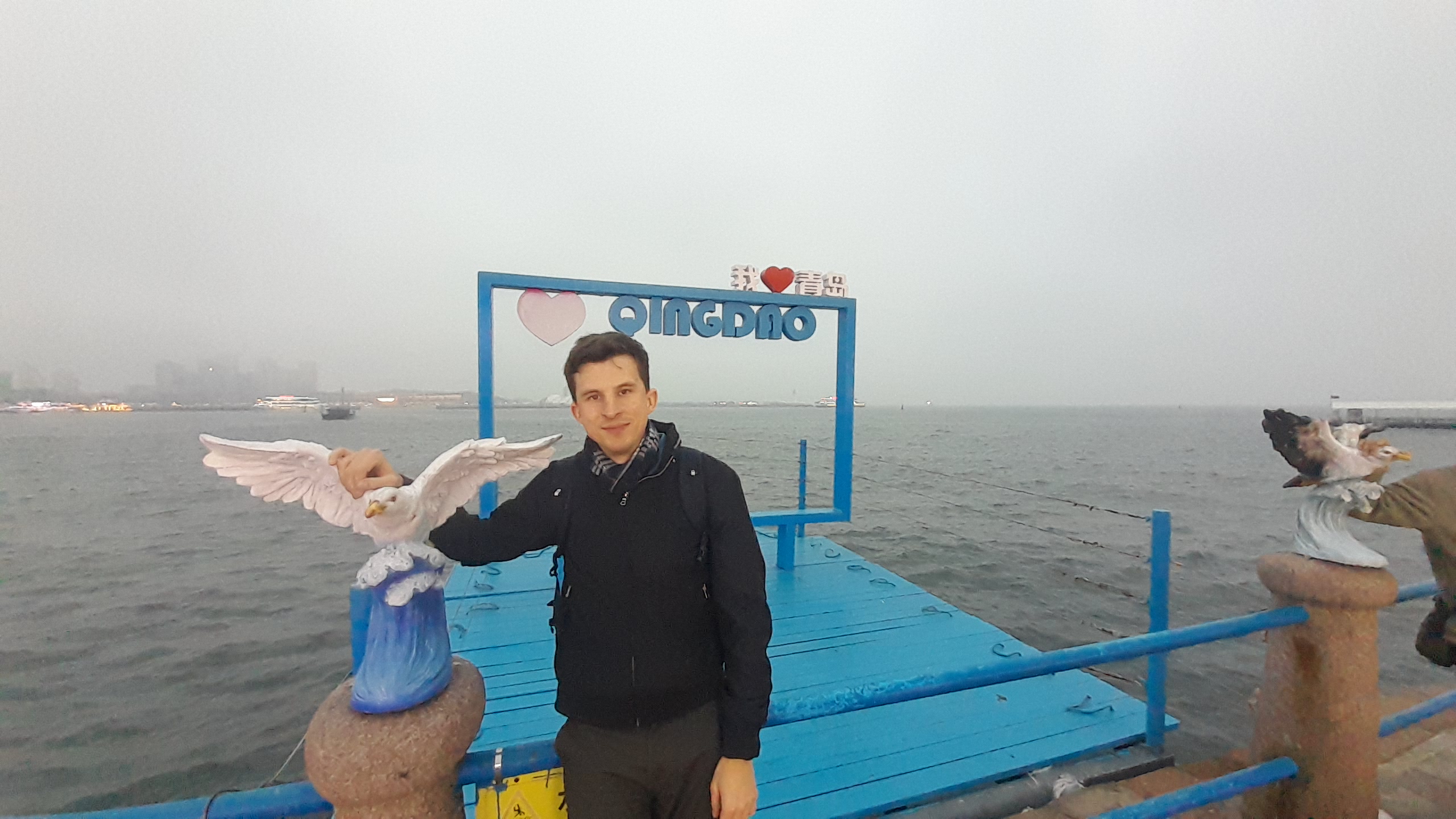
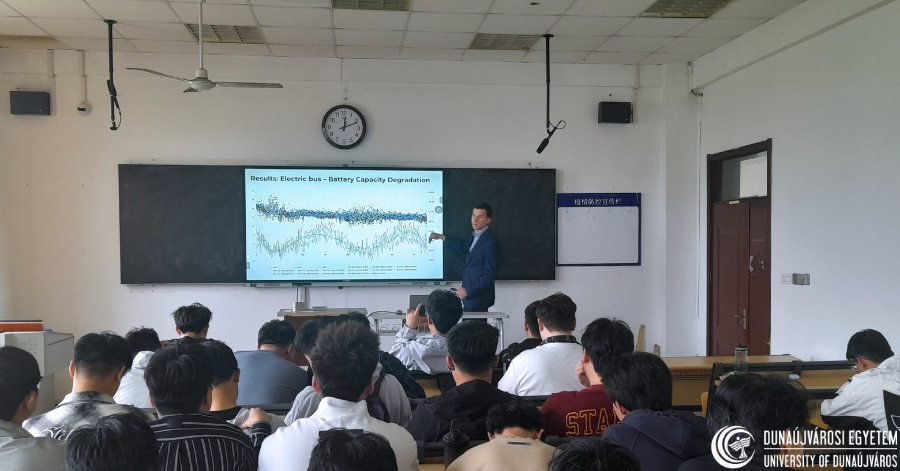
In May 2026, Dr. Szilassy spent approximately a week and a half at Qingdao Harbour Vocational and Technical College, where he taught production technology related to the design and construction of electric road vehicles.
Although our partner institution also featured in the previous part of the series, the same environment can reveal very different aspects through each teaching mobility. Qingdao’s immense size and the diversity of Chinese cuisine made a similarly strong impression on Dr. Szilassy, so this time we focus instead on the questions and insights that add further layers to the picture we have already explored.
A journey like this actually begins long before departure. The mobility was preceded by extensive research and preparation. From several thousand slides of collected professional material, Dr. Szilassy eventually compiled a teaching resource of around 400 slides. The aim was not simply to „take” existing course material abroad, but also to consider how the individual topics should build on one another, what prior knowledge could be expected, and how the material could be presented in a way that would allow students to genuinely deepen their understanding.
All of this becomes even more challenging in a foreign-language environment. Explaining technical terminology and complex relationships already requires a high degree of precision, and when an interpreter or language assistant is involved, another question arises: how much of the nuance of the professional content ultimately reaches the students? Translating a technical term does not necessarily mean that the full idea behind it has also been conveyed. This also requires considerable concentration from students as well: if something is not fully understood, it becomes increasingly difficult to follow it attentively, particularly for those who may have had less previous experience of studying in a foreign language.
The educational environment itself revealed a great deal about the daily routines the students adapt to. Stepping outside the classroom, the scale of the institution immediately became tangible in a way that numbers alone can hardly convey. In one four-storey teaching building, with six enormous lecture halls on each floor, several thousand students may leave their classes at the same time. Within moments, the spaces fill up and everyone moves quickly and purposefully. You have to keep up with the pace – as Dr. Szilassy put it, those who fall behind can easily miss out.
Located on the outskirts of the city, the enclosed university campus offers practically everything students might need in their daily lives. Given the significant distances involved, there is a very practical reason for this: anything that is not available on campus may require travelling several dozen kilometres. Consequently, the campus operates with a strong emphasis on functionality, a commitment to ensuring that the system itself provides solutions for as many situations as possible.
From a professional perspective, one particularly interesting aspect of this way of thinking is the ability to turn ideas into reality. Using a deliberately illustrative comparison, Dr. Szilassy noted that while in Hungary perhaps one or two valuable ideas out of a hundred reach the stage of marketable implementation, in China as many as one in two viable ideas may be channelled into processes that can result in an actual product or functioning solution. The ratio itself is not the point; what matters is the background and structure capable of supporting the journey from an idea to its practical application.
The size of the campus and the fact that it functions almost as a self-contained entity also placed the question of language use in a different perspective. In Dr. Szilassy’s view, in large countries such as China, Russia or the United States, where education, work and most aspects of everyday life can function fully within one’s own linguistic environment, the active use of a second language may be less of a practical necessity than in Europe’s smaller, closely interconnected countries. In an international educational environment, however, this makes the deliberate creation of a shared space for communication all the more important.
The impact of the journey did not end upon returning home. His experiences in China also influenced how he thought about Chinese students arriving at UOD and raised new questions. In a system of this size, how are individual needs recognised? How much attention can be devoted to one student?
A short visit cannot, of course, provide comprehensive answers to these questions. It can, however, help us better understand the cultural transition that a Chinese student may experience when coming to Hungary. In everyday life at UoD, it is often natural for us to ask questions, show interest, offer personal support or look for an individual solution to a particular problem. For a student coming from a different cultural background, this kind of directness and personal attention may in itself be a new experience.
All of this demonstrates that the effects of international mobility are never one-way. It is not only a European lecturer arriving in China who encounters a different way of operating; students coming to Hungary also find themselves in a new social and communicative environment. Easier access to personal support may, over time, mean that in certain situations they feel more comfortable turning to others for help, and may do so more frequently than they would have in the past. The encounter changes both sides.
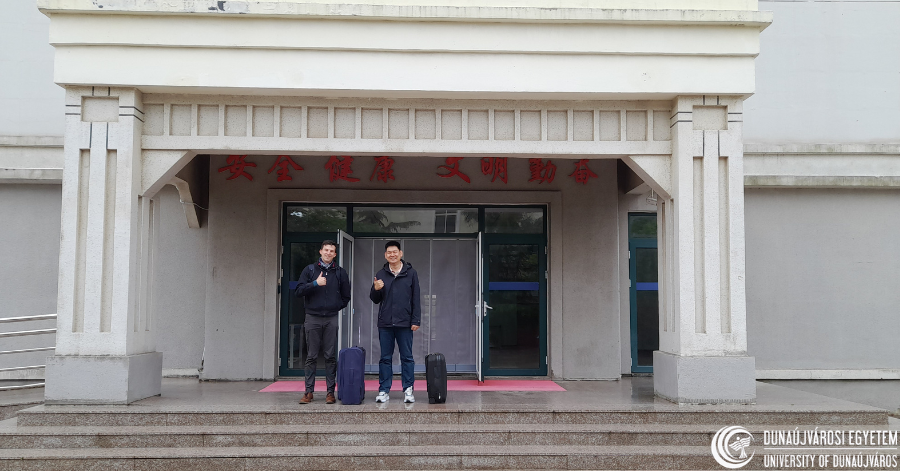
Seen from this perspective, international cooperation itself also takes on a more nuanced meaning. The distance between a European and a Chinese higher education institution is not merely geographical. Institutions may differ in size, educational culture, organisational practices, modes of communication, and in the outcomes and opportunities they see in a partnership. The true value of a relationship therefore cannot be measured solely by the number of mobilities or by the organisational and financial frameworks available. Time and mutual understanding are also needed to identify the professional points of connection that can give genuine substance to the partnership for both sides.
Dr. Szilassy also emphasised that he is very grateful for the opportunity and considers teaching mobilities of this kind extremely important. The journey gave him new perspectives, both professionally and personally, and experiences he could not have gained had he stayed at home.
For us, it is particularly important that our lecturers share these experiences with us. Learning from them helps us better understand different ways of operating, different reactions and cultural differences, and enables us to look at the situations we encounter through international cooperation and in the everyday lives of our international students from a new perspective.
To go, to experience, to share – and, along the way, to gain a deeper understanding of what we see.