



The final of Global HackAtom, Rosatom’s international university team competition, was held in Yekaterinburg, Russia, on 14–15 September as part of the International Youth Festival. The University of Dunaújváros team, representing Hungary, received a special award at the international final, which brought together participants from 15 countries.
A total of 80 university students from 15 countries competed in the final. The teams had 20 hours to develop a vision for how nuclear energy could be utilized in the cities of the future and how nuclear technologies could contribute to improving quality of life. The teams presented their concepts to the jury in English.
Among the projects presented at the final, the Russian team’s “Electromorsk 2050” vision received first prize. The team from South Africa came second with a development plan for an integrated nuclear city in Southeast Africa towards 2050, while the team from Kyrgyzstan finished third. The University of Dunaújváros team received a special award from the Federal Agency for Youth Affairs of the Russian Federation (Rosmolodyozh). The UoD students developed a concept for a floating city based on the extensive use of nuclear energy. In addition to energy production, their project proposed electric solutions for operating the city’s infrastructure.
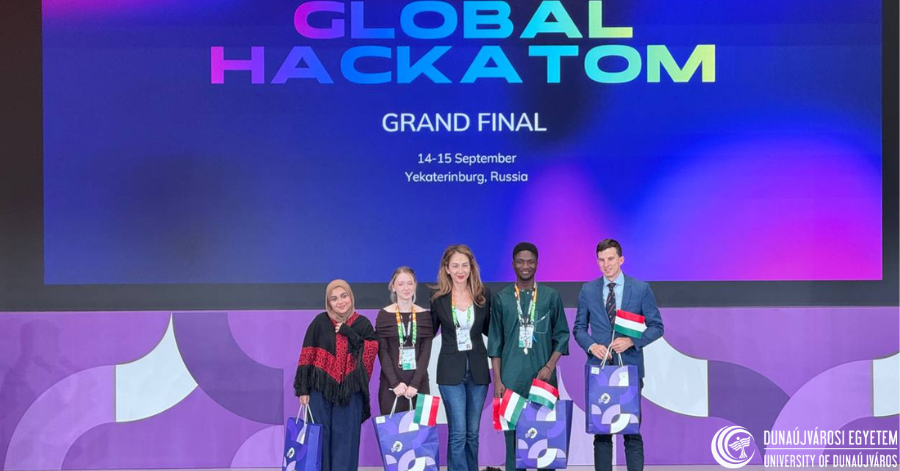
The University of Dunaújváros team (N-Hack) received a special award.
The jury highly appreciated the participants’ preparation and the quality of the submitted projects. Sergey Kiriyenko, First Deputy Chief of Staff of the Presidential Executive Office of the Russian Federation, congratulated the participants and winners of Global HackAtom. He expressed his hope that the students’ boldest dreams and the ideas developed during the competition would become reality.
As he emphasized, there is no greater joy than seeing a dream come true. “The ideas developed during the competition have the potential to change the world. The true value of technological breakthroughs and scientific discoveries lies in how they transform people’s lives. It is important to remember that the achievements we are proud of today once began as someone’s dreams,” Sergey Kiriyenko said.
Tatyana Terentyeva, Deputy CEO for Human Resources at Rosatom, highlighted that the participants had the opportunity to gain a unique experience, make new friends and meet like-minded people, while becoming part of a large international professional community.
“Nuclear technology knows no borders, and neither does the community of its developers. I sincerely hope that many of those present will continue working on the projects presented here and make a significant contribution to the peaceful use of nuclear technology and the creation of a new generation of cities,” Tatyana Terentyeva said. She also emphasized that the future is in the hands of young people and that Rosatom is open to cooperation with young professionals.
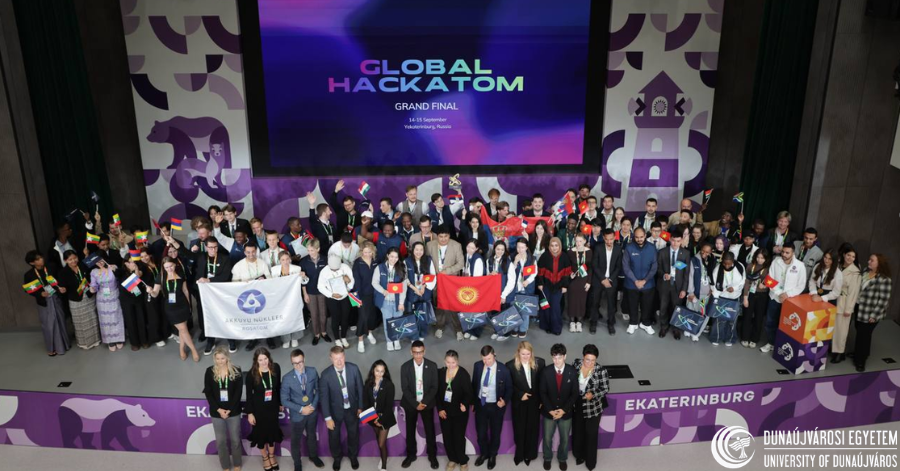
“Global HackAtom is a unique platform for young talents. This year, national rounds were held in 15 countries, including Hungary. The number of participating universities and countries is growing year by year, making the competition an increasingly global event. It brings together thousands of students from all over the world, from Southeast Asia to Latin America.
HackAtom competitions offer young people a unique opportunity to demonstrate their knowledge, skills and creativity by working on real-world challenges faced by major companies and governments around the world. Participants develop solutions in areas such as sustainable development, digital transformation, energy efficiency and the integration of high-tech solutions into everyday life.
“I am confident that the ideas of these talented young people will help lay the foundations for the future. They are the ones who will shape tomorrow’s world with their fresh perspectives and bold solutions,” said Yegor Kvyatkovsky, CEO of Rosatom International Network.

